Search

Raghav Kansal
Raghav Kansal
  • Home
  • News
  • Publications
    Highlights All
  • Presentations
    Highlights All
  • Projects
  • Awards
  • CV
  • Blog
  • Notes and Tutorials
    Standard Model Stats for HEP ML for HEP LHC and CMS

Selected Publications

Raghav Kansal, David Crair, Nghia Nguyen, Scott Pope, Brad Parry
2026 ICML
Multimarginal Flow Matching with Optimal Transport Potentials

A novel flow matching technique for inferring physical trajectories from observations snapshots, based on a physics-inspired modification of dynamic optimal transport. SOTA results on biological, meteorogical, and oceanographic datasets.

Cite
Zichun Hao, Raghav Kansal, Abhijith Gandrakota, Chang Sun, Jennifer Ngadiuba, Javier Duarte, Maria Spiropulu
2025 ML and the Physical Sciences Workshop @ NeurIPS (Spotlight)
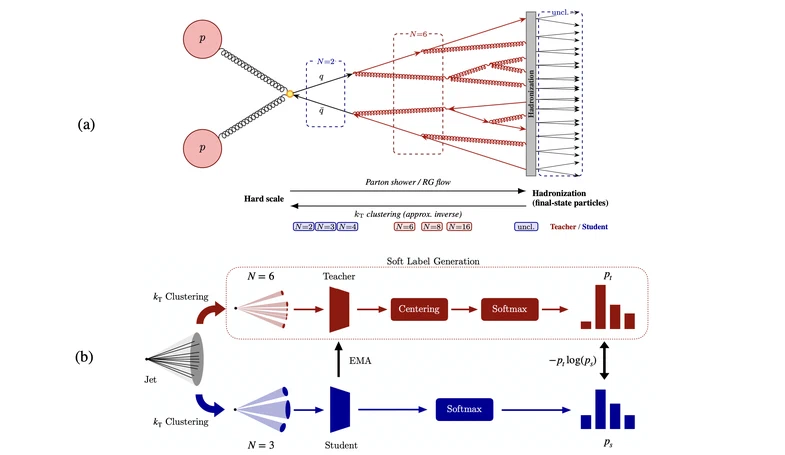
RINO: Renormalization Group Invariance with No Labels

A novel physics-informed self-supervised pretraining strategy for foundation models in physics. SOTA results on transfer learning between simulations and real data.

PDF arXiv Cite Project
CMS Collaboration
2025 JHEP
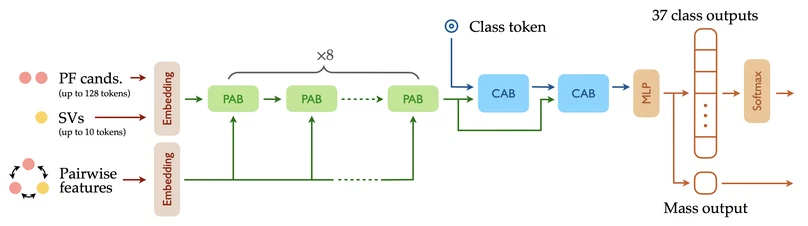
Particle transformers for identifying Lorentz-boosted Higgs bosons decaying to a pair of W bosons

A transformer-based algorithm and novel calibration scheme for identifying Higgs bosons. Used ubiquituously within the CMS collaboration now.

PDF arXiv Cite Project
Zichun Hao, Raghav Kansal, Javier Duarte, Nadezda Chernyavskaya
2023 Eur. Phys. J. C
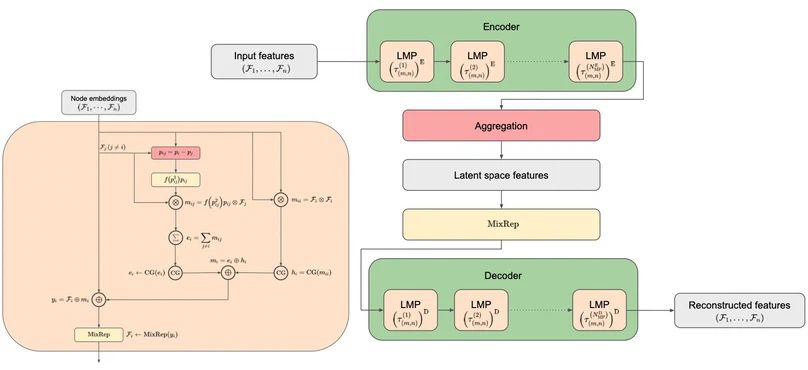
Lorentz group equivariant autoencoders

Developed an auto-encoder model equivariant to Lorentz transformations of the input. We find it outperforms graph and convolutional neural networks on jet reconstruction and anomaly detection tasks.

PDF arXiv Cite Code Project Project DOI
Raghav Kansal, Anni Li, Javier Duarte, Nadezda Chernyavskaya, Maurizio Pierini, Breno Orzari, Thiago Tomei
2023 Phys. Rev. D
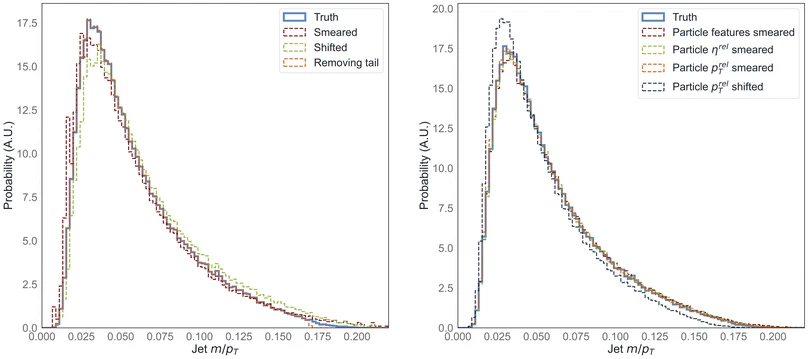
Evaluating generative models in high energy physics

A systematic investigation of evaluation metrics for fast simulations, including two new ones we propose, the Fréchet and kernel physics distances, which we find to be the most sensitive. We also introduce the generative adversarial particle transformer (GAPT) model, which is significantly faster than MPGAN.
PDF arXiv Cite Code Project DOI
CMS Collaboration
2022 Phys. Rev. Lett.
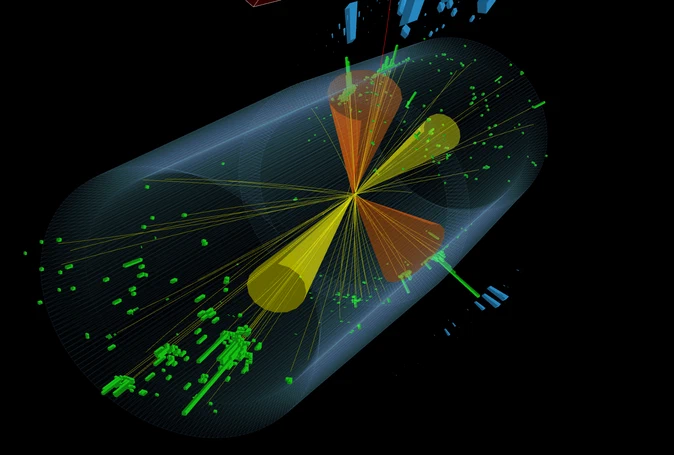
Search for nonresonant pair production of highly energetic Higgs bosons decaying to bottom quarks

Search for events with two high momentum Higgs bosons, using graph neural networks to find Higgs jets. We set the strongest constraints to date on di-Higgs production and the two-vector-boson coupling.

PDF arXiv Cite Project DOI
Raghav Kansal, Javier Duarte, Hao Su, Breno Orzari, Thiago Tomei, Maurizio Pierini, Mary Touranakou, Jean-Roch Vlimant, Dimitrios Gunopulos
2021 NeurIPS 2021
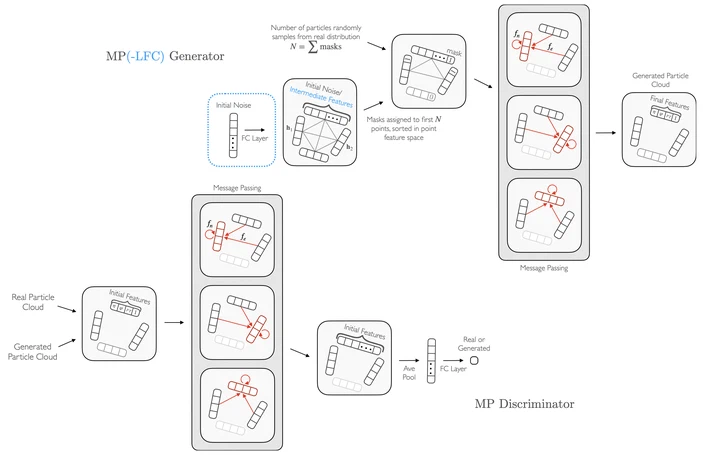
Particle Cloud Generation with Message Passing Generative Adversarial Networks

Introduces the message-passing generative adversarial (MPGAN) model and JetNet dataset. We found the physics-informed MPGAN model outperformed all existing point-cloud GANs in simulating high momentum jets.

PDF arXiv Cite Code Dataset Project
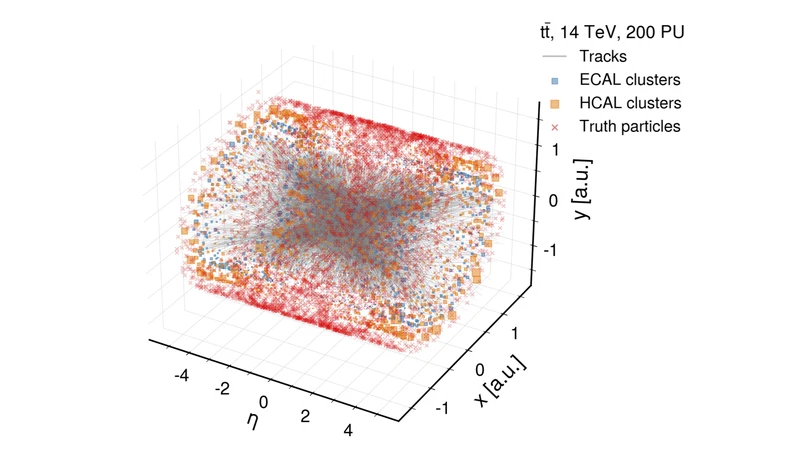
Farouk Mokhtar, Raghav Kansal, Daniel Diaz, Javier Duarte, Joosep Pata, Maurizio Pierini, Jean-Roch Vlimant
2021 ML and the Physical Sciences Workshop @ NeurIPS 2021
Explaining machine-learned particle-flow reconstruction

Developed a graph neural network model to reconstruct particle collisions and interpreted the results using explainable AI techniques.

PDF arXiv Cite Project Project Poster

© 2025 Raghav Kansal. All rights reserved.

Published with Wowchemy — the free, open source website builder that empowers creators.

Cite
Copy Download